Home

Amplify Your Sustainable Social Impact
Making truly sustainable social impact can seem daunting. Human challenges are complex, sticky, and can seem insurmountable. At the Center for Design Kindness, we will help your organization amplify your social impact. We help you work directly with your audience to create deeply effective and sustainable solutions. Our mission and purpose is to amplify your impact.
Human-Centered Programming
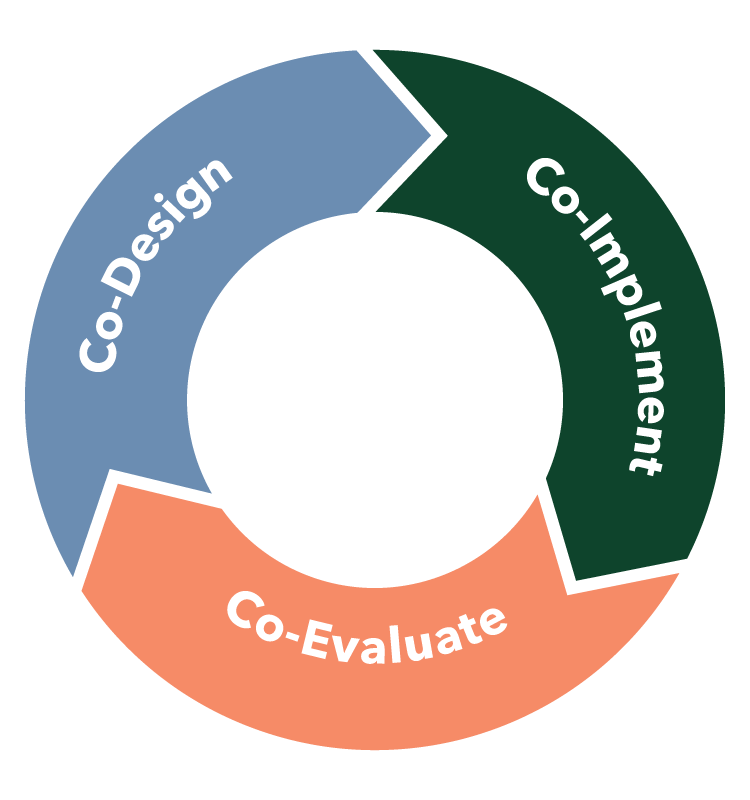
Solve challenging human problems in deep partnership with your audience. Bring their stories, goals, challenges and creativity into your programs. We can help you and your audience co-design, co-implement, and co-evaluate solutions that get at the heart of their challenges and goals. Check out our free tools and guides to get you started and learn more on our blog.

Learning & Growth
We help social impact organizations develop and implement an effective plan for Monitoring, Evaluation, Accountability, and Learning (M.E.A.L). Develop a powerful Theory of Change to drive your MEAL activities. Measure and communicate your outcomes with meaningful metrics and stories. Support learning, growth and development of employees, volunteers, and your audience. Receive hands-on tools, templates, and training. We can help with a strong and flexible learning strategy tailored to your organization.

Communication & Messaging
We will help you share the message of your impact while keeping the dignity and agency of your beneficiaries front and center. Engage your beneficiaries in communicating their stories, their growth, and the impact of your work together. Communicate the true impact of your programs through stories and meaningful metrics. We will work with you to develop a strategy to compellingly communicate your impact to donors, grant-makers, your community, and your audience.

“Working with the Center for Design Kindness has helped our organization build key partnerships and develop a sustainable strategy for growth.”
Corrine Ellsworth-Beaumont, Ph.D.,
CEO, Know Your Lemons Foundation

“The Center for Design Kindness has some excellent tools and templates to help humanitarian program managers use human-centered design to improve programs.”
Tim Robbins., Audience Manager
Latter-day Saint Charities
About
The Center for Design Kindness helps humanitarian, non-profit, and social enterprises improve sustainable outcomes. We offer deep expertise in humanitarian services, training and development, communications and advocacy, human-centered programming, monitoring, evaluation, accountability, and learning.
Get in Touch
Reach out to chat about how we can help your organization, or organizations you support and fund.
Honors
Incubated through Harvard’s Innovation Labs and awarded a Spark Grant.

 Center for Design Kindness